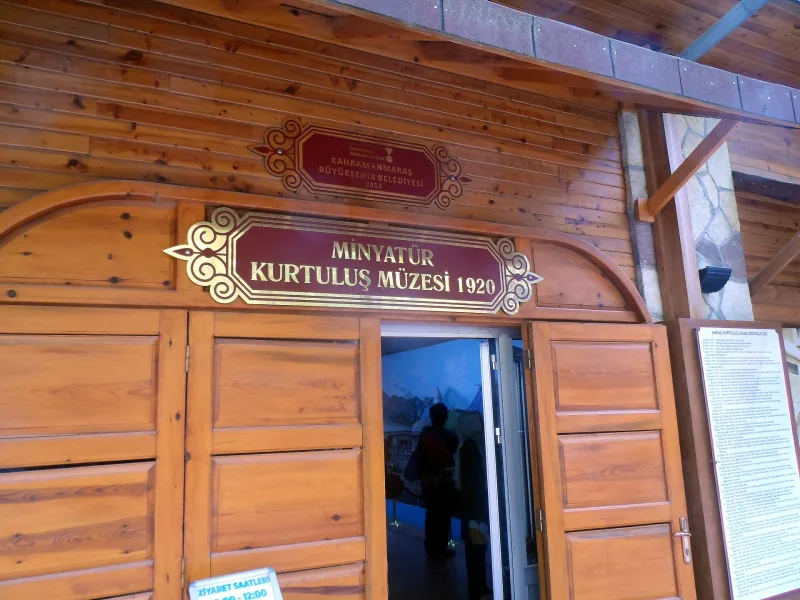
Museum of Independence, Eskişehir — Kurtuluş Müzesi

The Independence Museum, Eskişehir — A Living History of the War of Independence

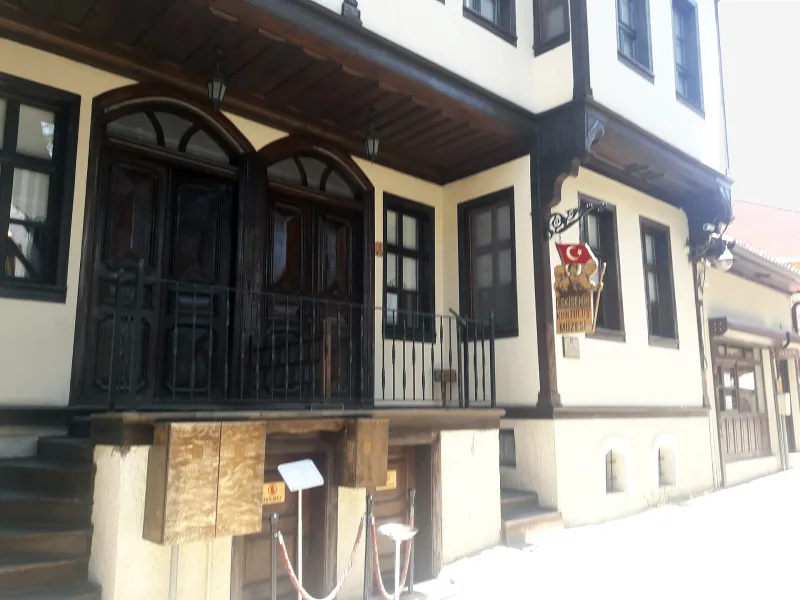
In the historic district of Odunpazarı, where wooden Ottoman mansions stand side by side, there is a house with a unique history. In 1921, İsmet İnönü—commander of the Turkish forces in the First Battle of İnönü—stayed there. Today, this restored mansion, Mestanoğlu Halil—the Independence Museum, Eskişehir (Kurtuluş Müzesi)—was opened on October 29, 2016, to mark the 93rd anniversary of the proclamation of the Republic of Turkey. There are no boring display cases with yellowed papers here: the Independence Museum, Eskişehir uses interactive touchscreens, wax figures, and multimedia halls to immerse visitors in the era of the War of Independence (1919–1923) and the Lausanne Conference.

History and Origins of the Independence Museum, Eskişehir

The Turkish War of Independence (1919–1923) was one of the most dramatic periods in the country’s history. After World War I, the Ottoman Empire was torn apart: Greek, British, French, and Italian troops occupied various regions of the country. Under these circumstances, Mustafa Kemal Atatürk led the national liberation movement. Central Anatolia became a key theater of operations.

Eskişehir was at the epicenter of these events. It was here, in January 1921, that the First Battle of İnönü took place—a battle in which Turkish units under the command of İsmet İnönü defeated the Greek forces. The victory had enormous strategic and moral significance: it demonstrated that the young republican army was capable of standing up to a vastly superior enemy. İsmet İnönü later became Turkey’s second president, and his name became a symbol of this victory.

The Mestanoğlu Halil Mansion, where İsmet İnönü took command during the battle, has been preserved in the historic Odunpazarı district. In June 2015, the Eskişehir Metropolitan Assembly initiated a project to restore it. The work was completed by the end of 2016. On October 29, 2016—the 93rd anniversary of the proclamation of the Republic of Turkey—the museum opened its doors to visitors. It was established by the Eskişehir Metropolitan Municipality.

The choice of opening date was symbolic: the Kurtuluş Museum became a gift to the city for the national holiday. The choice of building was no less significant: the mansion where the commander of the victorious battle lived has been transformed into a place of remembrance, preserving both personal history and the history of the nation.

Architecture and What to See

Mestanoğlu Halil Konağı is a typical example of an Ottoman wooden mansion in Odunpazarı: a two-story building with overhanging upper floors, wooden beams, and a traditional layout featuring a central hall. The 2015–2016 restoration restored its historical appearance, preserving the original structures wherever possible.

Children’s Floor: Interactive History

A special area for children is designated on the first floor. Touchscreens are installed here, allowing visitors to learn about the events of the War of Independence (1919–1923) and the Lausanne Conference (1922–1923). The interactive format allows children to “experience” historical events in a playful way, without overwhelming them with academic text.

Cartoon Hall

On the top floor are four themed halls. The “Cartoon Hall” (Karikatürler Odası) displays drawings from humorous magazines from 1919–1923. These cartoons are a unique historical source: they depict the Allies who occupied Istanbul, the government of Ahmed Tevfik Pasha, and those who opposed the War of Independence. Satire as a mirror of the era is a rare exhibition concept that offers a completely different perspective on events.

Strategic Room

The “Strategic Room” (Strateji Odası) is dedicated specifically to the First Battle of İnönü. Here, visitors can examine maps, tactical diagrams, and the room’s main attraction—wax sculptures of İsmet İnönü, Fahrettin Altay, and Mehmetçik (a generalized image of a Turkish soldier). The wax figures are highly realistic and create the impression of standing right next to the actual participants in the events.

The Newspaper Hall and Presentation Hall

The “Newspaper Hall” (Gazetelerle Kurtuluş Savaşı) shows how the press covered the military events. The “Presentation Hall” (Sunum Odası) houses visual artifacts arranged in chronological order—from the start of the occupation to the proclamation of the republic. This allows visitors to gain a comprehensive understanding of the course of events in a single visit.

Selfie Zone with Atatürk

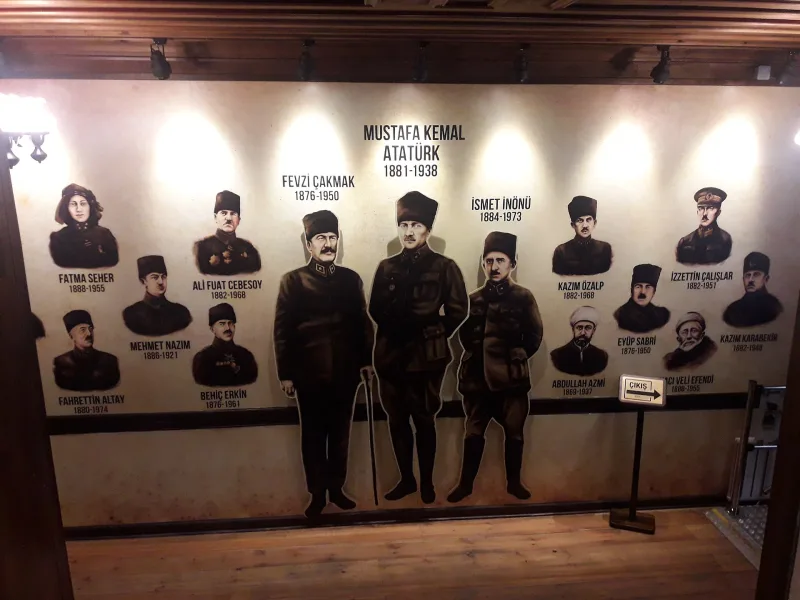
The first floor features a unique room for visitors: here, you can take photos against a backdrop of portraits of Mustafa Kemal Atatürk or documentary photographs from the War of Independence. This light touch of interactivity appeals to a younger audience and turns a visit to the museum into an experience worth sharing.

Interesting facts and legends

  • In 1921, İsmet İnönü—commander of the First Battle of İnönü—stayed at the Mestanoğlu Halil mansion. It was this very fact that determined the choice of the building for the museum.
  • The museum opened on October 29, 2016—exactly on the 93rd anniversary of the proclamation of the Republic of Turkey. The symbolism of the date was intentional.
  • The “Strategic Room” features wax figures of actual participants in the battle: İsmet İnönü, Fahrettin Altay, and Mehmetçik—a collective image of the Turkish soldier.
  • Cartoons from satirical magazines from 1919–1923 represent a rare type of exhibition: few historical museums display satire as a primary historical source.
  • İsmet İnönü, whose connection to the mansion gave the museum its historical legitimacy, later became Turkey’s second president and served as prime minister for many years.

How to get there

The Kurtuluş Museum is located in the Odunpazarı district of Eskişehir. The most convenient way to reach Eskişehir from Istanbul is by the Hızlı Tren high-speed train: the journey time from Istanbul Söğütlüçeşme or Pendik is about 1.5–2 hours. From Ankara, the train ride takes about 1.5 hours. The Eskişehir train station is located in the city center; from there, it’s about a 15–20-minute walk or a 5–7-minute taxi ride to Odunpazarı.

In Odunpazarı itself, the museum is within walking distance of other historic mansions in the district and the Museum of Contemporary Glass Art (Çağdaş Cam Sanatları Müzesi). Eskişehir EGO city buses connect the station with Odunpazarı. By car from Ankara—about 230 km via Highway O-21, with a travel time of about 2.5 hours.

Tips for travelers

The museum is open daily; admission is usually free or for a nominal fee—check the official website of the Eskişehir City Hall before your visit. The tour takes about 1–1.5 hours if you take your time exploring all the halls.

Odunpazarı is one of Turkey’s most picturesque historic districts, preserving wooden mansions from the 19th and early 20th centuries. A visit to the Kurtuluş Museum fits seamlessly into a walking tour of the neighborhood. Be sure to stop by the neighboring Çağdaş Cam Sanatları Müzesi—Turkey’s first museum of contemporary glass art, located just a few steps away.

Visit on weekdays: on weekends, Odunpazarı is particularly popular among locals and can get crowded. If you’re interested in the history of the War of Independence, bring along a Russian translation of “Nutuk”—Atatürk’s 1927 speech: Eskişehir and İnönü play a significant role in it. The Independence Museum in Eskişehir is not just a museum, but a place where Turkey’s history ceases to be an abstraction and becomes a reality tied to a specific wooden house with the scent of old wood and crumbling walls.
Your comfort is important to us, click on the desired marker to create a route.
Meeting for minutes before
Yesterday. 17:48
Frequently asked questions — Museum of Independence, Eskişehir — Kurtuluş Müzesi Answers to frequently asked questions about Museum of Independence, Eskişehir — Kurtuluş Müzesi. Information about the service's operation, capabilities, and use.
The Kurtuluş Museum focuses on interactivity: there are no standard display cases filled with yellowed documents. Instead, there are touchscreens, multimedia rooms, realistic wax figures of participants in the First Battle of İnönü, and even a selfie zone featuring documentary photographs from the era. This format makes the history of the War of Independence (1919–1923) accessible to both adults and children.
In 1921, İsmet İnönü—commander of the Turkish forces in the First Battle of İnönü—stayed at this mansion. It is precisely this historical connection that made the building an ideal location for a museum: the house is not merely a product of its era; it was a direct participant in it. The 2015–2016 restoration restored the mansion’s historic appearance while preserving its original structures.
The opening date was chosen deliberately: October 29 is Turkish Republic Day. In 2016, the 93rd anniversary of the proclamation of the Republic of Turkey was celebrated. The Kurtuluş Museum served as a symbolic gift to the city on this national holiday, highlighting the connection between the victory in the War of Independence and the birth of the republic.
İsmet İnönü was a military and political leader who commanded Turkish forces in the First Battle of İnönü in January 1921. The victory over Greek forces in this battle was of immense strategic and moral significance for the young republican army. İnönü later became Turkey’s second president and served as prime minister for many years. The battle itself is named after him.
The First Battle of İnönü took place in January 1921 in the Eskişehir region. Turkish forces under the command of İsmet İnönü defeated the Greek troops that had occupied parts of Anatolia following World War I. The victory demonstrated that the national liberation army led by Mustafa Kemal Atatürk was capable of standing up to a superior enemy. This battle became one of the turning points of the War of Independence of 1919–1923.
The museum occupies two floors. On the first floor, there is an interactive children’s area with touchscreens and a photo room featuring documentary photographs from the era. The second floor features four themed halls: the “Cartoon Hall” with satirical drawings from magazines dating from 1919 to 1923, the “Strategic Room” with maps, tactical diagrams, and wax sculptures of İsmet İnönü, Fahrettin Altay, and Mehmetçik, the “Newspaper Hall,” dedicated to press coverage of the war, and the “Presentation Hall” with a chronological exhibition spanning from the start of the occupation to the proclamation of the republic.
Yes, the “Cartoon Gallery” (Karikatürler Odası) is a rarity even by the standards of serious historical museums. On display here are drawings from humorous magazines published between 1919 and 1923: satires targeting the occupiers, the government of Ahmed Tevfik Pasha, and opponents of the War of Independence. The satirical press, as a primary historical source, offers an unconventional and highly informative perspective on the era.
Yes, the museum has been specially designed for family visits. On the first floor, there is a separate children’s area with touchscreens, where history is presented in a playful, interactive way without being overloaded with academic text. The wax figures and multimedia galleries are also well-received by children and teenagers.
Admission to the museum is usually free or nominal—it is sponsored by the Eskişehir Metropolitan Municipality. However, conditions are subject to change, so it is advisable to check the latest information on the Eskişehir Metropolitan Municipality’s official website before your visit.
The Odunpazarı district is one of Turkey’s most picturesque historic neighborhoods, featuring wooden mansions from the 19th and early 20th centuries. Just a few steps from the Kurtuluş Museum is the Çağdaş Cam Sanatları Müzesi—Turkey’s first museum of contemporary glass art. You can easily explore the entire neighborhood on foot in half a day, combining visits to both museums with a stroll through the historic streets.
The best time to visit is in the spring and fall. The weather during these seasons is pleasant for walking around Odunpazarı, and there are significantly fewer tourists than in the summer. The museum itself is open year-round, so winter visits are also possible—especially if you’re coming specifically to see the historical exhibits.
Yes, the 1922–1923 Lausanne Conference is reflected in the museum’s overall concept alongside the events of the War of Independence. Interactive screens and the “Presentation Hall” cover the period from the start of the occupation to the signing of the Treaty of Lausanne and the proclamation of the Republic of Turkey, allowing visitors to gain a complete picture of the era in a single visit.
User manual — Museum of Independence, Eskişehir — Kurtuluş Müzesi Museum of Independence, Eskişehir — Kurtuluş Müzesi User Guide with a description of the main functions, features, and principles of use.
Plan your visit for a weekday: on weekends, Odunpazarı is particularly popular with locals and tourists, and the neighborhood can get quite crowded. Allow 1–1.5 hours to explore the museum at a leisurely pace. Check the opening hours on the official website of the Eskişehir City Hall—hours and admission policies are subject to change.
The most convenient way to travel from Istanbul is by the Hızlı Tren high-speed train from either the Istanbul Söğütlüçeşme or Pendik stations—the journey takes about 1.5 to 2 hours. From Ankara, the train ride takes approximately 1.5 hours. By car from Ankara, it is about 230 km along Highway O-21, with a travel time of about 2.5 hours. The Eskişehir train station is located in the city center.
It takes about 15–20 minutes to walk from the train station to Odunpazarı, or 5–7 minutes by taxi. Eskişehir EGO city buses also connect the station to the historic district. If you have time, walking from the station gives you a chance to see the city and get your bearings.
The museum is located in the Mestanoğlu Halil Mansion, within walking distance of other historic sites in Odunpazarı. Use the coordinates 39.76444, 30.52361, or enter “Kurtuluş Müzesi” into your navigation app. Nearby is the Çağdaş Cam Sanatları Müzesi—it’s easy to spot and can serve as a landmark.
Start on the first floor: explore the interactive children’s area and learn about the historical context of the era through touchscreens, and take a photo in the room featuring documentary photographs. Then head up to the second floor and explore the four themed galleries: caricatures, a strategic room with wax figures, the newspaper gallery, and the chronological exhibition. This route provides a comprehensive overview of the events of 1919–1923.
After visiting the museum, take a stroll through the historic district: the wooden mansions from the 19th and early 20th centuries create an atmosphere where the history of the War of Independence feels particularly vivid. Stop by the neighboring Çağdaş Cam Sanatları Müzesi—Turkey’s first museum of contemporary glass art. Both museums, plus a stroll through the neighborhood, can easily be covered in a comfortable half-day.
If you’re interested in the history of the War of Independence, it’s worth familiarizing yourself with the biography of İsmet İnönü and the course of the First Battle of İnönü before your trip—this will help you appreciate the exhibition more fully. For those who enjoy primary sources, we recommend bringing a translation of “Nutuk”—Atatürk’s 1927 speech, in which Eskişehir and İnönü play a significant role.